
- All
- Product Name
- Product Keyword
- Product Model
- Product Summary
- Product Description
- Multi Field Search
 English

Views: 0 Author: Site Editor Publish Time: 2026-10-22 Origin: Site


Achieving the perfect balance between authentic flavor profiles and necessary shelf stability creates a constant operational tension when utilizing pre-prepared aromatics. Poor-quality aromatics carry hidden costs that disrupt culinary operations. Excess water, harsh preservatives, and improper storage of Ginger Paste lead to flavor degradation, recipe inconsistency, and significant product waste. Commercial kitchens demand consistency, speed, and safety. You cannot afford to compromise on foundational flavor building blocks. Every curry, marinade, and stir-fry relies on the precise pungency of its aromatic base. When you choose the right supplier, you streamline your entire prep operation. You reduce labor overhead and eliminate unpredictable yield variations. This technical evaluation guide helps procurement teams, chefs, and high-volume users analyze ingredient labels and assess storage requirements. We will explore chemical preservatives, grind sizes, and thermal stability. Armed with this knowledge, you can select the optimal formulation for your specific operational constraints.
Ingredient purity directly impacts yield; pastes with high water or oil content require larger volume usage to achieve target flavor profiles.
The choice of acidulant (e.g., citric acid vs. acetic acid) and preservative dictates both the shelf-life and the residual flavor footprint in the final dish.
Storage methodology (ambient, refrigerated, or frozen) must align with usage velocity to prevent oxidation and enzymatic browning.
Texture profiles (fine puree vs. coarse mince) and packaging formats significantly influence culinary application and back-of-house dispensing efficiency.
Table of Contents

Ginger paste quality depends on ginger content, formulation, processing methods, and texture. Buyers should review ingredient specifications and choose a product that matches their cooking or manufacturing requirements.
Commercial ginger paste may contain fresh ginger, water, salt, oil, or permitted stabilizers. Higher ginger content can provide a more pronounced ginger flavor, but the ideal formulation depends on its intended application.
Some manufacturers use thickeners to improve consistency and reduce separation. Buyers should check ingredient percentages, viscosity, and flavor before selecting a product.
For food preparation and manufacturing, Yipin's Freshly Ground Ginger Paste provides a ready-to-use ginger ingredient.
Acidulants and preservatives may help maintain the quality and safety of commercially processed ginger paste.
Citric acid and vinegar adjust acidity, while permitted preservatives may help control certain microorganisms. However, shelf stability depends on validated processing, formulation, packaging, and storage conditions.
Buyers should verify ingredient labels, applicable additive limits, and product shelf-life documentation. Acidification alone does not destroy bacterial spores.
Grinding size influences ginger paste texture and how it blends into recipes.
Fine ginger paste is suitable for sauces, marinades, and dressings that require a consistent texture. Coarser ginger preparations retain more visible fibers and work well in stir-fries and textured dishes.
Feature | Fine Ginger Puree | Coarse Ginger Mince |
|---|---|---|
Texture | Smooth, finely ground | Visible ginger particles |
Flavor Distribution | Blends evenly | More noticeable ginger pieces |
Best Applications | Sauces, marinades, dressings | Stir-fries, curries, savory dishes |
Processing | Fine grinding | Coarse chopping or grinding |
Main Consideration | Viscosity and uniformity | Particle size and consistency |
The right ginger paste depends on recipe requirements, ingredient preferences, packaging, and food-safety standards. Restaurants and food manufacturers should compare formulations rather than relying only on price.
Pure ginger paste allows greater flexibility when adjusting ginger flavor in different recipes. It is useful for sauces, marinades, soups, and food products requiring a specific ginger concentration.
Ginger-garlic blends combine two aromatics into one prepared ingredient, reducing preparation time.
For kitchens using both ingredients regularly, Yipin's Garlic & Ginger Paste offers a convenient alternative. Buyers should check the ingredient ratio and formulation before use.
Organic and conventional ginger differ mainly in farming practices and certification requirements.
Organic sourcing may be important for brands targeting certified organic products. Conventional ginger can also meet food-safety and quality requirements when properly managed.
Neither production method automatically guarantees stronger flavor or better nutritional quality.
Commercial buyers should request relevant information on origin, pesticide residues, heavy metals, and applicable certifications.
Food manufacturers should verify ingredient and allergen documentation before purchasing ginger paste.
Depending on the destination market, relevant requirements may include:
Halal or Kosher certification.
Gluten-free or other dietary claims.
Allergen declarations.
Ingredient composition and additives.
Food-safety certifications.
Product traceability and test reports.
Certification validity and product coverage should be confirmed with the supplier.
Packaging size influences purchasing efficiency and foodservice operations.
Small jars are convenient for retail and everyday cooking. Larger packaging can reduce preparation work in restaurants and food manufacturing.
Yipin's Ginger Paste 10kg provides a bulk option for industrial food processing applications.
Before ordering, confirm available packaging, MOQ, product specifications, storage requirements, and delivery arrangements.
Evaluation Factor | What Buyers Should Check |
|---|---|
Ginger Content | Ingredient percentage and formulation |
Texture | Fine puree or coarse mince |
Additives | Acidulants, preservatives, stabilizers |
Flavor | Ginger intensity and consistency |
Certifications | Applicable food-safety and dietary documents |
Packaging | Retail jars or bulk packaging |
Storage | Unopened shelf life and instructions after opening |
Supplier Support | Samples, MOQ, customization, and delivery |
For commercial purchasing, selecting a consistent formulation and reliable supplier is essential for maintaining product quality across production batches.
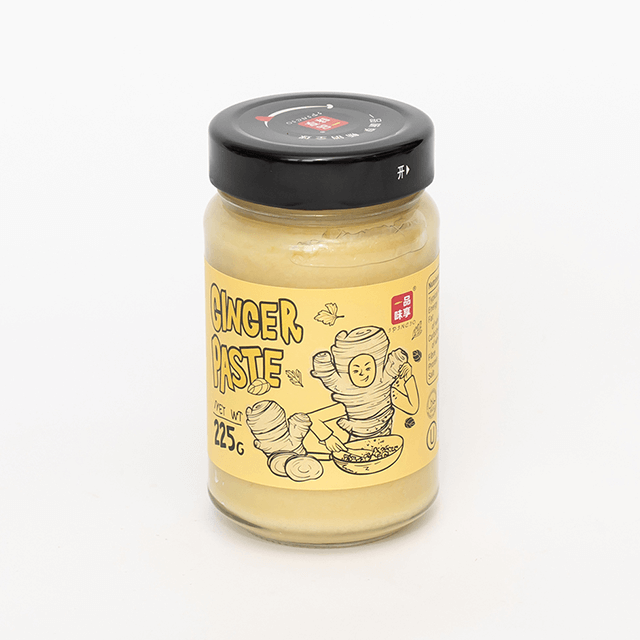
Ginger paste storage requirements depend on its formulation, processing method, packaging, and intended use. Commercially processed products may support ambient storage before opening, while homemade ginger paste generally requires refrigeration or freezing.
Ambient storage is suitable only for products specifically processed and packaged for shelf stability. Refrigeration supports short-term storage, while freezing helps preserve homemade ginger paste for longer periods.
Storage Method | Main Advantage | Key Consideration |
|---|---|---|
Ambient Storage | No refrigeration needed for approved shelf-stable products | Follow unopened product specifications |
Refrigeration | Convenient access for daily cooking | Limited storage period and contamination risks |
Freezing | Suitable for longer-term storage | May affect texture after thawing |
For example, Yipin's Freshly Ground Ginger Paste is listed as suitable for ambient storage before opening, under its specified packaging conditions.
Exposure to oxygen and light may affect ginger paste color, aroma, and flavor. Suitable packaging helps reduce these changes during storage.
After opening, use clean utensils, close containers securely, and follow the manufacturer's storage instructions. Color alone cannot confirm whether a product remains safe to eat.
Packaging influences storage convenience, portion control, and food waste. Retail jars are practical for smaller kitchens, while larger bags or drums may be more suitable for industrial food preparation.
Packaging Format | Main Advantage | Best Application |
|---|---|---|
Glass Jars | Convenient dispensing and resealing | Retail and small kitchens |
Sachets | Portion control and convenient distribution | Catering and foodservice |
Bulk Plastic Bags | Efficient handling of large quantities | Food manufacturing |
Drums | Suitable for high-volume purchasing | Industrial processing |
Yipin's Ginger Paste 10kg is supplied in plastic bags for industrial food applications, including salad processing.
Commercial ginger paste and homemade ginger paste offer different advantages in cost, convenience, and production control.
Homemade ginger paste requires washing, peeling, grinding, cleaning, and equipment maintenance. These activities increase preparation time and labor requirements.
Commercial ginger paste reduces preparation work and may offer more consistent product specifications. For restaurants and food manufacturers, this can simplify recipe planning and large-batch production.
Whole ginger requires additional preparation, which may create peeling waste and unused material. Ready-made paste reduces these preparation losses, although actual usable yield depends on the product formulation and handling.
Buyers should compare the cost per kilogram of usable ginger ingredient rather than purchase price alone.
Evaluation Factor | Homemade Ginger Paste | Commercial Ginger Paste |
|---|---|---|
Preparation Labor | Higher | Lower |
Ingredient Control | Direct control | Depends on supplier formulation |
Batch Consistency | Varies with ingredients | Can be standardized |
Packaging | Usually small batches | Retail and bulk options |
Storage | Requires careful short-term handling | Depends on validated processing |
Best Application | Home cooking and small kitchens | Restaurants and food manufacturers |
For B2B buyers, supplier quality control, product documentation, and supply reliability are important when selecting commercial ginger paste.
Food-safety certifications and documented quality controls help buyers evaluate supplier reliability.
Before placing bulk orders, request relevant certificates and product documentation, including:
Ingredient specifications and allergen information.
Applicable food-safety certifications.
Shelf-life and storage instructions.
Microbiological and chemical testing information where required.
Batch identification and traceability records.
Yipin lists ISO 22000, HACCP, BRC, IFS, HALAL, and KOSHER among its company-level certifications and qualifications. Buyers should confirm current certificate validity and the scope relevant to their intended products.
Ginger origin, processing methods, and product formulation can influence flavor, texture, and consistency.
Buyers should verify raw material sourcing, ingredient composition, production records, and batch traceability rather than assuming all ginger from a particular country has the same flavor characteristics.
Packaging should match purchasing volume and production needs. Smaller jars or sachets may be suitable for catering, while bulk bags support industrial applications.
Yipin also offers Ginger Powder in 10kg bags, providing another option for manufacturers developing dry seasonings, sauces, and processed foods.
When comparing commercial suppliers, focus on product quality, formulation consistency, packaging options, documentation, and delivery requirements.
For wholesale purchasing, request product samples, confirm available packaging sizes, and discuss OEM specifications before bulk production.
Testing new suppliers requires a standardized methodology to ensure quality. You cannot rely on spec sheets alone. You must physically evaluate the product under real kitchen conditions.
Evaluate color grading under neutral, natural light to check for dullness or artificial dyes.
Assess aroma volatility immediately upon opening the seal to gauge freshness.
Test heat retention by simmering the paste in a neutral oil for five minutes.
Monitor the samples for syneresis (water separation) after sitting at room temperature for two hours.
Conduct blind taste tests against your current inventory to remove brand bias.
Watch for critical red flags during evaluation. Excessive starch fillers create a gummy, unnatural texture that coats the palate. Artificial coloring masks the use of poor-quality, older roots. Fermented off-notes indicate improper processing or a broken cold chain. Metallic aftertastes point to severe packaging failures or highly acidic reactions with low-grade containers.
Request detailed product specification sheets and Certificates of Analysis from potential suppliers.
Conduct a blind sensory test against your current inventory using a standardized high-heat cooking application.
Evaluate packaging formats for back-of-house compatibility and dispensing efficiency.
Audit your current cooler and freezer space to determine your optimal storage strategy.
A: Once opened, refrigerated commercial pastes typically last between 2 to 4 weeks. The exact duration depends on the specific preservatives used and the facility's temperature control. Always keep the container tightly sealed to prevent oxidation and moisture loss.
A: Yes, freezing halts flavor degradation effectively. However, freezing can cause cellular damage, leading to slight moisture weeping upon thawing. Thaw the product slowly under refrigeration to maintain the best possible texture and emulsion stability.
A: This discoloration results from a natural enzymatic reaction. When ginger is exposed to acidic environments or cold temperatures, its anthocyanins react, causing a blue or green tint. While visually unappealing, it is completely safe to consume and does not impact the flavor.
A: Generally, one tablespoon of commercial paste equals one tablespoon of freshly grated ginger. However, pastes with high water content may require a 1.5 to 1 ratio to achieve the same pungency. Always verify the concentration level on the supplier's specification sheet.
A: Yes, sodium benzoate is a highly regulated, FDA-approved food preservative. It is used in very small concentrations to prevent mold and bacterial growth. It is entirely safe for commercial food applications and ensures product stability at ambient temperatures.
A: Oil-based pastes encapsulate the volatile flavor compounds, preventing them from flashing off during high-heat cooking like wok frying. Water-based pastes disperse more rapidly, making them ideal for cold applications, marinades, and simmering sauces where immediate integration is required.


