
- All
- Product Name
- Product Keyword
- Product Model
- Product Summary
- Product Description
- Multi Field Search
 English

Views: 0 Author: Site Editor Publish Time: 2026-10-22 Origin: Site


Processing raw aromatics on a commercial food line creates immediate bottlenecks. Raw ginger roots arrive covered in field soil, requiring dedicated wash stations and strict segregation to prevent cross-contamination. Peeling irregular rhizomes leads to heavy yield losses, while milling the tough, fibrous core rapidly degrades cutting blades and stator tolerances on shear pumps. Formulators and plant managers face a constant battle. They need authentic, high-pungency flavor profiles, but they also require strict microbial control and consistent viscosity to keep automated lines running. Pre-processed bulk ingredients solve these specific floor-level inefficiencies. Moving away from raw root handling allows facilities to reallocate labor, reduce equipment wear, and standardize batch yields. Selecting the right ingredient format means matching supplier processing methods and packaging directly to your facility's thermal capabilities and pumping infrastructure.
Standardization over Variability: Commercial ginger paste eliminates the seasonal flavor fluctuations and yield losses associated with raw ginger processing.
Formulation Matching: The choice between clean-label aseptic puree and acidified/preserved paste dictates shelf-life, storage requirements, and end-product labeling.
Microbial Mitigation: Pre-processed paste significantly reduces the risk of soil-borne pathogens (like Salmonella and E. coli) entering the manufacturing facility.
Table of Contents
Processing fresh ginger in-house requires washing, peeling, grinding, and equipment maintenance. These steps increase labor costs and may result in raw material loss. Actual yields depend on ginger quality, processing methods, and equipment efficiency.
Ready-made ginger paste can reduce preparation work and improve production efficiency. For food manufacturers handling larger volumes, Yipin's Ginger Paste 10kg provides a convenient bulk ingredient option for sauces, marinades, and processed foods.
Raw ginger requires careful handling because soil, washing water, and processing equipment may introduce microbial contamination. Food manufacturers must manage cleaning, sanitation, and cross-contamination risks during preparation.
Commercial ginger paste produced under appropriate food-safety controls may reduce some raw-material handling requirements. However, buyers must still verify processing methods, microbiological specifications, storage conditions, and supplier documentation.
For industrial sourcing, Yipin also offers 25kg Drum Ginger Paste, suitable for buyers seeking larger packaging formats. Food-safety controls should remain part of the buyer's HACCP program.
Commercial ginger paste is available in different formulations to meet food manufacturing requirements. Buyers should compare ingredients, flavor, processing methods, and storage conditions before selecting a product.
Clean-label ginger purees focus on simple ingredient lists and minimal additives. Aseptic processing can support extended unopened shelf life when the product is processed and packaged using a validated system.
However, aseptic products are not necessarily single-ingredient formulations. Buyers should verify ingredient composition, processing specifications, and storage instructions.
For bulk sourcing, Yipin offers All-Natural Fermented Ginger Paste in Drum Without Additives. Its actual processing method and storage requirements should be confirmed before ordering.
Acidified ginger paste may contain citric acid, vinegar, salt, or permitted preservatives to support product stability.
These ingredients can influence flavor, pH, and recipe formulation. However, commercial shelf stability requires validated processing and packaging rather than a specific ingredient or pH value alone.
Buyers should request product specifications and verify compatibility with their manufacturing requirements.
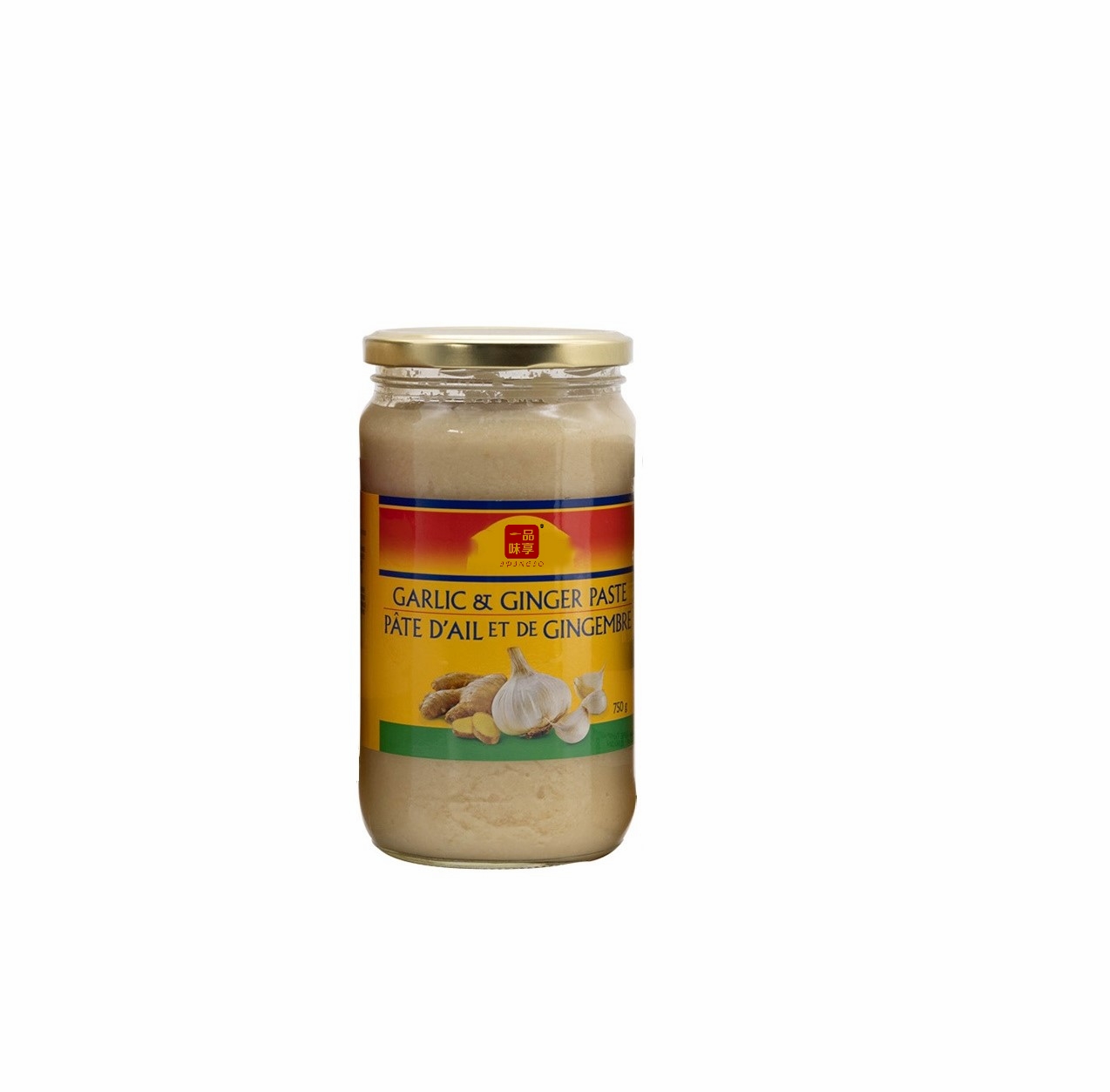
Ginger-garlic paste combines two common aromatics for sauces, marinades, ready meals, and food processing.
Pre-blended formulations can reduce preparation time and simplify ingredient management. The ginger-to-garlic ratio should match the intended recipe.
Yipin's Garlic & Ginger Paste offers a convenient option for food manufacturers seeking a combined aromatic ingredient.
Formulation | Main Feature | Typical Application | Key Consideration |
|---|---|---|---|
Clean-Label Puree | Simple ingredient formulation | Sauces, ready meals | Ingredient verification |
Aseptic Puree | Validated aseptic processing | Industrial food production | Packaging and handling |
Acidified Paste | Controlled acidity | Marinades, sauces | Flavor and pH |
Salted Paste | Added salt for formulation purposes | Savory food processing | Sodium content and stability |
Ginger-Garlic Blend | Combined aromatic ingredients | Curries, marinades, meal kits | Ginger-to-garlic ratio |
Storage conditions and shelf life depend on the specific product and validated manufacturing process.
Bulk ginger paste quality depends on flavor consistency, texture, composition, and food-safety controls. Manufacturers should establish clear purchasing specifications before placing large orders.
Gingerols and shogaols contribute to ginger's characteristic pungency. Their levels can vary with raw material selection, processing, and storage.
Buyers should evaluate flavor intensity, aroma, and batch consistency through sampling. For products requiring controlled pungency, laboratory analysis may also be useful.
Peeling and milling affect the appearance and texture of ginger paste.
Fine grinding produces a smoother consistency suitable for sauces and automated filling systems. Coarser grinding retains more visible ginger fibers and may suit textured food applications.
Food manufacturers should confirm particle size and processing requirements according to their equipment.
Brix, viscosity, and moisture content provide useful information for formulation control.
Brix measures soluble solids, while viscosity influences pumping, mixing, and dispensing. These measurements should be evaluated together with ginger content and the complete ingredient formulation.
For industrial applications, buyers should agree on measurable product specifications before production.
Food safety is essential when sourcing commercial ginger paste. Buyers should request relevant product documentation and verify that testing requirements match their market and application.
Important documents may include:
Product specifications and ingredient declarations.
Applicable Certificate of Analysis (COA).
Microbiological test results.
Food-safety certifications.
Batch identification and traceability information.
Storage and shelf-life instructions.
Certification documents should be checked for validity and applicable scope.
Packaging influences transportation, storage efficiency, and production handling. The most suitable format depends on order volume, dispensing equipment, and manufacturing requirements.
Drum packaging can support high-volume food processing by reducing the number of individual containers handled during production.
Yipin lists 25kg Per Barrel Drum Ginger Paste among its bulk product options.
Buyers should confirm available packaging materials, liner specifications, handling requirements, and the applicable product shelf life.
Flexible packaging is practical for food manufacturers that use ginger paste in measured production batches.
Yipin's Ginger Paste 10kg is supplied in plastic bags for industrial food applications, including salad processing.
The appropriate package size should match daily ingredient consumption and handling capacity.
Packaging Format | Main Advantage | Suitable Application |
|---|---|---|
Retail Jars | Convenient smaller portions | Retail and catering |
10kg Plastic Bags | Practical bulk handling | Batch food processing |
25kg Drums | Larger purchase volume | Industrial production |
Large Aseptic Containers | May support enclosed ingredient transfer | High-volume automated processing |
Large aseptic containers are an industry option; availability from Yipin should be confirmed separately.
Commercial ginger paste shelf life depends on formulation, processing, packaging, and storage conditions.
Yipin's 10kg Ginger Paste product page lists an unopened shelf life of 18 months under its stated storage conditions.
After opening, buyers must follow the applicable manufacturer's instructions. Do not assume all acidified, salted, or aseptic ginger pastes have the same storage life.
Reliable sourcing requires consistent ingredient quality, suitable documentation, and dependable delivery arrangements.
Agricultural supply conditions may affect ginger availability, pricing, and quality.
Food manufacturers can reduce purchasing risks by reviewing supplier capacity, lead times, inventory arrangements, and alternative sourcing options.
Long-term purchasing agreements may support planning, but actual supply commitments should be confirmed contractually.
High-temperature processing can change ginger aroma and pungency.
For retort foods, sauces, and ready meals, manufacturers should evaluate ginger flavor after the complete production process.
Any late-stage ingredient addition must remain compatible with the validated food-safety process. Changes to processing steps should be reviewed before commercial production.
Unexpected changes in viscosity, moisture, or flavor may indicate formulation differences or production inconsistencies.
Buyers should compare incoming materials against approved samples and product specifications.
When necessary, laboratory analysis can help verify ingredient composition and investigate suspected undeclared additives.
Evaluation Factor | What Buyers Should Verify |
|---|---|
Ingredient Composition | Ginger content and declared additives |
Flavor Consistency | Approved sample and batch standards |
Texture | Grind size, viscosity, and fiber content |
Food Safety | Relevant certificates and test documents |
Packaging | Bag, jar, or drum specifications |
Shelf Life | Validated storage instructions |
Traceability | Batch records and product origin |
Supply Capability | MOQ, lead time, and delivery arrangements |
For industrial buyers, selecting a reliable ginger paste supplier requires a balance of ingredient quality, production compatibility, food safety, and purchasing efficiency.
Looking for bulk ginger paste for food manufacturing? Contact Yipin to discuss product specifications, packaging options, samples, and OEM requirements.

Securing the optimal Ginger Paste requires balancing your end-product's label claims against your facility's actual processing capabilities. You must align the formulation type with your storage infrastructure and automated dosing systems. Moving away from raw root processing instantly upgrades your operational efficiency, stabilizes your flavor profiles, and drastically reduces microbial risks on the production floor.
Take the following actions to optimize your procurement strategy:
Shortlist suppliers based exclusively on active GFSI certifications and their ability to provide transparent origin documentation.
Request bench-scale samples to rigorously evaluate the flavor profile, color, and gingerol pungency against your current baseline formulations.
Review technical specification sheets to ensure the Brix levels and viscosity match the exact requirements of your automated pumping infrastructure.
Demand comprehensive Certificates of Analysis (COAs) for every sample to verify strict adherence to your microbiological safety thresholds.
Conduct full pilot plant runs to test the ingredient's thermal stability and pumpability before committing to binding annual volume contracts.
A: The typical replacement ratio ranges from 1:1 to 1:1.2. This depends entirely on the moisture content and concentration of the specific product. Formulators must adjust recipes based on the supplier's Brix specifications to match the original raw aromatic intensity accurately.
A: Unopened aseptic packaging generally offers a shelf life of 12 to 24 months under ambient conditions. Once you break the seal, opened or refrigerated shelf life drops significantly. It typically ranges from one to three months depending on the specific preservative load and facility hygiene.
A: Yes, you can freeze it for storage extending up to a year. However, freezing impacts the cellular structure. It often causes syneresis, or water weeping, upon thawing. Formulators must account for potential texture changes and slight flavor retention loss during the freeze-thaw cycle.
A: This color change results from a natural enzymatic reaction. The anthocyanins react when exposed to acidic environments. Premium suppliers mitigate this harmless discoloration through precise thermal processing and pH management, ensuring a consistent visual profile for end-users.
A: The standard pH threshold sits below 4.2 for acidified shelf-stable products. Maintaining this precise acidity level prevents the growth of dangerous pathogens, specifically Clostridium botulinum. This ensures strict food safety compliance during ambient warehouse storage and transportation.
A: Mechanical grinding and thermal pasteurization can convert sharp gingerols into milder shogaols. This slightly reduces the initial raw heat. Premium suppliers utilize advanced cold-milling and rapid thermal kill-steps to minimize this degradation, preserving the authentic aromatic intensity required for commercial formulations.


