
- All
- Product Name
- Product Keyword
- Product Model
- Product Summary
- Product Description
- Multi Field Search
 English

Views: 0 Author: Site Editor Publish Time: 2026-10-22 Origin: Site


Swapping fresh-milled aromatics for dehydrated alternatives fundamentally alters recipe chemistry. You cannot treat wet and dry ginger formats as interchangeable ingredients without adjusting your culinary approach. Incorrect substitutions compromise flavor profiles and destroy the structural integrity of precision-baked goods. Cooks face immediate operational challenges when swapping these formats. Variations in moisture content dictate how ingredients bind. The chemical conversion from gingerol to shogaol drastically changes heat levels. Concentration differences lead to inconsistent batch quality or completely ruined dishes.
Before adjusting your recipes, you must clarify basic terminology. Ground ginger and ginger powder are culinary synonyms referring to the exact same dehydrated product. They differ occasionally in commercial milling fineness, but their application remains identical. You need a systematic framework for evaluating wet paste against dry powder. Success requires understanding substitution ratios, application suitability, and storage scalability. This guide breaks down the exact science of ginger formats so you can execute substitutions flawlessly.
Potency and Chemical Shift: Dehydration converts gingerol to shogaol, making ginger powder nearly twice as pungent as ginger paste by volume, requiring strict fractional substitution and an iterative "start small" approach.
Moisture and Texture Impact: Ginger paste introduces hydration and acidity (if commercially preserved), making it ideal for wet applications (curries, marinades), whereas powder is mandatory for dry rubs and precision baking.
The Fresh Ginger Baseline: Ginger paste acts as a direct 1:1 volumetric substitute for fresh grated ginger. Consequently, the standard culinary baseline dictates using 1 tablespoon of ginger paste for every 1/4 to 1/2 teaspoon of ginger powder.
Storage and Scalability: Powder offers superior shelf stability and lower cross-contamination risk, while paste requires refrigeration and strict expiration management.
Table of Contents
Ginger paste and ginger powder differ in moisture, flavor, concentration, and texture. Ginger paste retains more characteristics of fresh ginger, while ginger powder offers a concentrated dry seasoning option. Understanding these differences helps improve recipe consistency.
Ginger paste contains more moisture and blends easily into soups, marinades, curries, and sauces. Its natural fibers can also add body to thicker recipes. Yipin's Freshly Ground Ginger Paste provides a convenient option for prepared foods and everyday cooking.
Ginger powder contains much less moisture and works well in dry seasoning mixes. It should be mixed thoroughly to avoid clumping.
Gingerols and shogaols contribute to ginger's characteristic pungency. Fresh ginger and ginger paste often have brighter aromatic notes, while dried ginger tends to develop a warmer, more concentrated flavor.
Drying and heating can change the proportions of these compounds. However, flavor intensity depends on ginger variety, processing conditions, storage, and cooking time. Neither format is universally more heat-resistant.
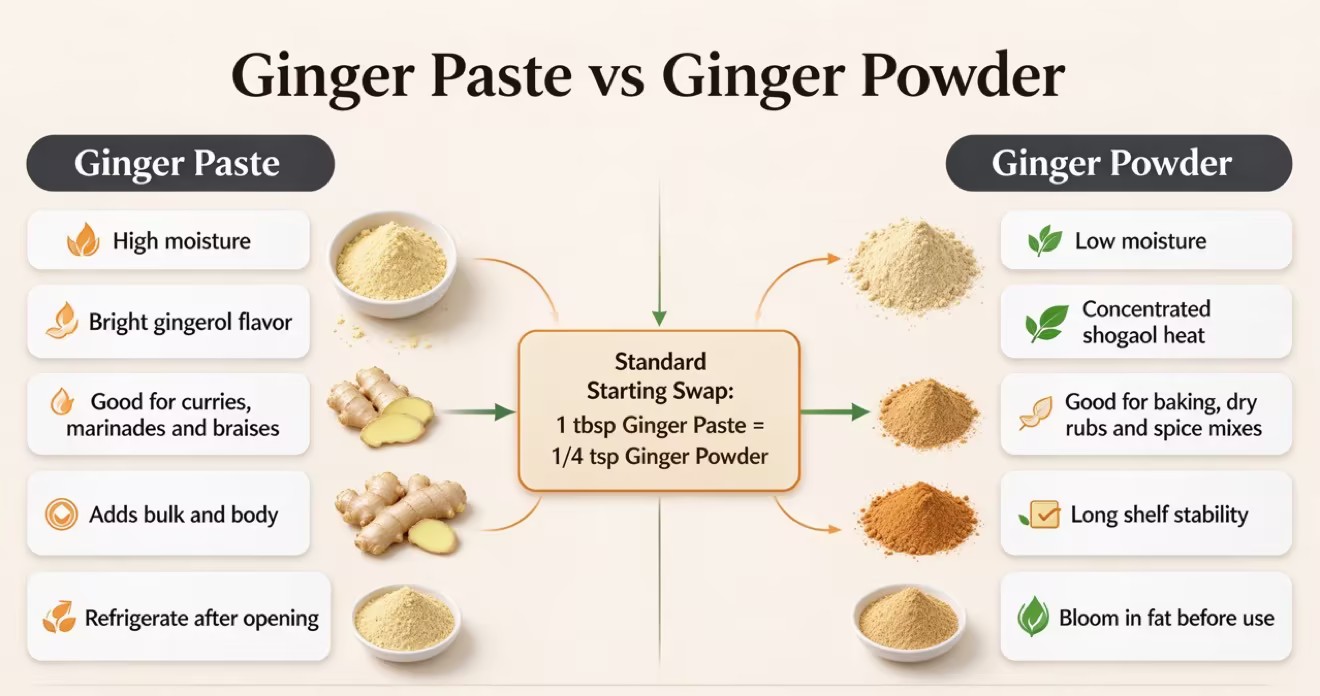
Choose ginger paste for moisture-rich recipes such as curries, soups, marinades, and dressings. In baking, its added moisture may require adjustments to the liquid ingredients.
Ginger powder is usually easier to measure and blend into dry recipes. For commercial food preparation, Yipin's Ginger Paste 10kg offers a bulk packaging option for food processing and catering applications.
Ginger paste may leave fine natural fibers in sauces and marinades, adding texture and body. Ginger powder disperses into liquids but does not fully dissolve, so insufficient mixing may leave fine particles.
For smooth sauces, the final texture depends on grinding quality, blending, and filtration. Yipin's Ginger Sauce is another ready-to-use option combining ginger with scallion and seasonings.
Cooking Application | Recommended Format | Main Reason |
|---|---|---|
Curries and Stir-Fries | Ginger Paste | Fresh aroma and easy blending |
Marinades | Ginger Paste | Moist texture and even distribution |
Baking | Ginger Powder | Convenient dry mixing |
Spice Rubs | Ginger Powder | Easy distribution with other spices |
Sauces and Dressings | Ginger Paste or Ginger Sauce | Suitable for wet formulations |
Bulk Food Processing | Depends on formulation | Consistency, flavor, and packaging requirements |
For food manufacturers and catering businesses, the best choice also depends on ingredient specifications, moisture control, production methods, and the desired finished-product texture.
Ginger paste and ginger powder can replace each other in many recipes, but they differ in moisture, flavor, and concentration. Always begin with a small amount and adjust according to taste.
Ginger paste provides a fresher aroma and adds moisture to recipes. As a rough starting point, try 1 tablespoon of ginger paste for 1/4 teaspoon of ginger powder, then adjust based on the product's concentration and the desired flavor.
For consistent flavor and convenient preparation, explore Yipin's Freshly Ground Ginger Paste.
Simple substitution steps:
Start with a small amount of ginger paste.
Mix it thoroughly into the recipe.
Reduce other liquids slightly if the texture becomes too thin.
Taste and adjust before serving.
Ginger powder has a concentrated, earthy flavor and works well when additional moisture is undesirable. Start with approximately 1/4 teaspoon of powder for each tablespoon of ginger paste, then adjust gradually.
For cooked dishes, ginger powder can be mixed into warm oil or directly into sauces. Avoid overheating it, as excessive heat may create bitter flavors.
Ginger powder is generally more concentrated by weight, while ginger paste often offers a fresher aroma. Their heat and flavor depend on ginger variety, processing methods, moisture content, and additional ingredients.
Feature | Ginger Paste | Ginger Powder |
|---|---|---|
Texture | Moist and smooth | Dry and fine |
Flavor | Fresh and aromatic | Earthy and concentrated |
Moisture | Higher | Lower |
Best Applications | Marinades, curries, sauces | Baking, spice rubs, dry mixes |
Substitution | Adjust to taste | Start with a small amount |
Ginger paste is especially useful in marinades, curries, and sauces. Its moist texture blends easily with garlic, onions, and other seasonings, helping create a consistent flavor base.
Yipin's Ginger Sauce combines ginger with scallion, oil, and seasonings, making it suitable for dipping sauces and savory dishes.
For food manufacturers, Bulk Ginger Paste 10kg offers a packaging option for larger-scale food preparation and processing.
Ginger powder is usually more convenient for baking and dry seasoning blends. It mixes evenly with flour, sugar, and other dry ingredients without adding significant moisture.
Ginger paste can also be used in selected baked goods, but recipes may require adjustments to moisture and flavor balance.
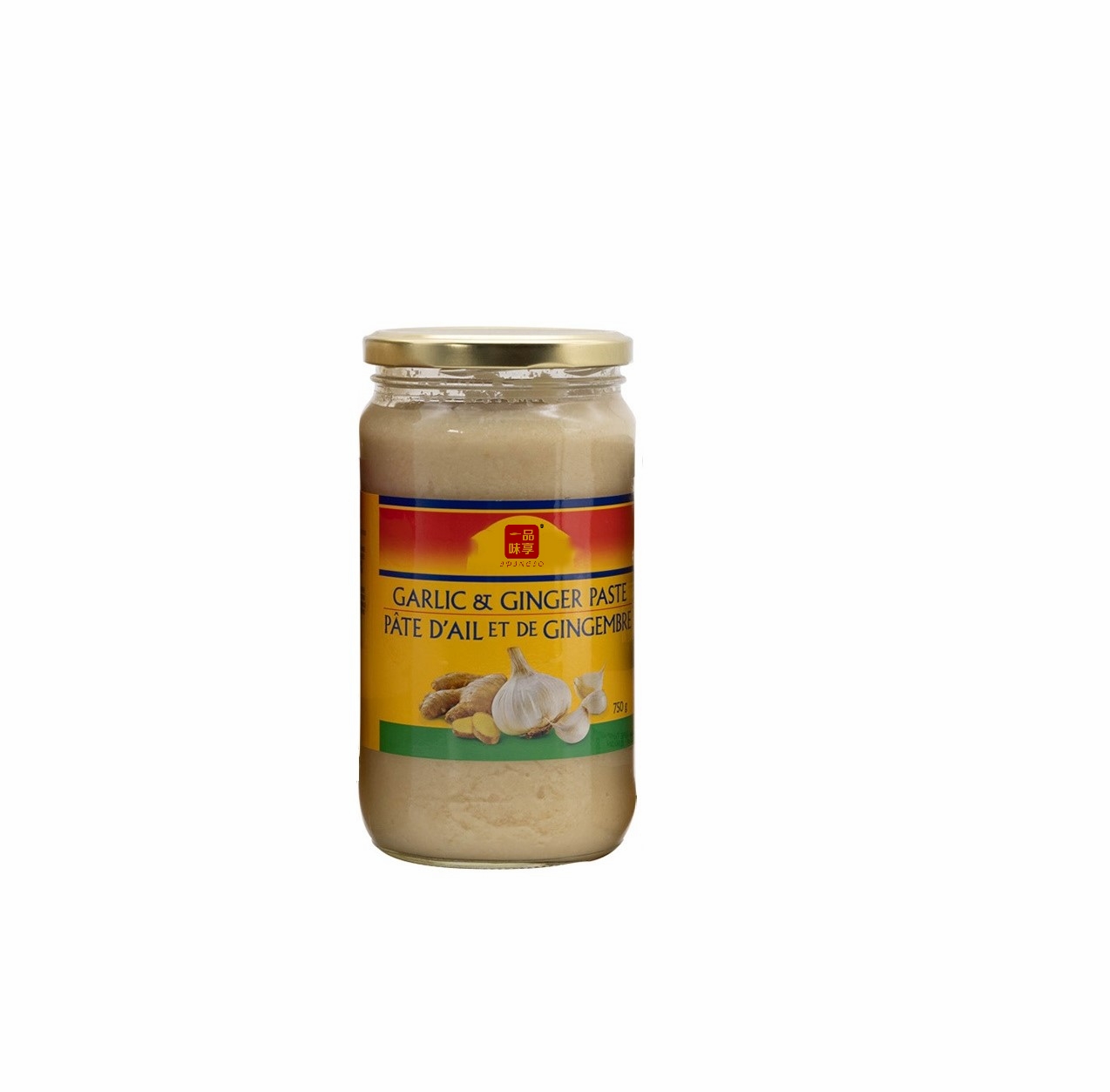
For prepared seasonings and specialty recipes, Yipin also offers Garlic & Ginger Paste, combining both ingredients in a ready-to-use format.
Ginger powder generally stores well in a cool, dry place, although its aroma may weaken over time. Ginger paste requires closer attention to packaging, storage temperature, and handling.
Commercial ginger pastes may be shelf-stable before opening when processed and packaged appropriately. After opening, follow the manufacturer's refrigeration and use-by instructions.
Always use clean utensils and discard products showing unusual odors, mold, or other signs of spoilage.
Commercial ginger paste formulations vary. Some contain ginger, salt, citric acid, oil, or other ingredients, depending on the product.
Buyers should review ingredient lists, allergen information, and applicable food-safety documentation before purchasing.
Yipin provides different ginger paste formats for retail, catering, and food processing applications. Buyers can compare available formulations and packaging options according to their product requirements.
Ginger paste and ginger powder serve entirely different culinary functions based on their moisture content and chemical makeup. You cannot swap them at a 1:1 ratio without severely impacting the flavor, texture, and structural integrity of your dish. Paste delivers the bright, volatile notes of gingerol and provides physical bulk for wet sauces. Powder delivers the concentrated, earthy heat of shogaol and integrates flawlessly into dry applications and baked goods.
To execute flawless substitutions and maintain recipe integrity, follow these exact steps:
Audit your recipe's baseline hydration requirements to determine if it can handle the excess water introduced by wet paste.
Identify the peak cooking temperature of your dish; use powder for high-heat baking and paste for low-heat simmering.
Scale down your measurements drastically when moving from paste to powder, using the 1 tablespoon to 1/4 teaspoon conversion rule.
Temper commercial pastes in hot oil before adding dairy to prevent the hidden citric acid from curdling your cream sauces.
Bloom dry powder in warm cooking fats to simulate the immediate aromatic release of fresh aromatics.
A: No. Ginger paste introduces excess water and oil into the batter. This alters the precise hydration ratios required for baking. It prevents proper gluten development and ruins the structural integrity of cookies and cakes. Always use dry powder for precision-baked goods.
A: The standard culinary ratio is 1 tablespoon of ginger paste for every 1/4 teaspoon of ginger powder. Powder is highly concentrated due to dehydration. Always scale down significantly when moving from wet paste to dry powder to avoid overpowering the dish.
A: Ginger paste acts as a direct 1:1 volumetric substitute for fresh minced ginger. Both contain high moisture levels and rely on the gingerol compound for flavor. However, commercial pastes may contain added oils or acids that slightly alter the final taste.
A: No. Ginger paste contains gingerol, which offers a bright, fresh, and zesty flavor. Ginger powder contains shogaol, a compound created during dehydration. Shogaol tastes earthier, sharper, and packs nearly twice the perceived heat of fresh gingerol.
A: Yes, but only for flavor, not for tenderizing. Powders lack the active enzymes like zingibain found in wet pastes that break down meat proteins. If substituting for flavor, bloom the powders in warm oil first to release their aromatic compounds.
A: Commercial pastes often contain citric acid or vinegar to extend shelf life. This added acidity can alter the flavor profile of delicate dishes. It also poses a risk of curdling dairy-based sauces if not tempered in hot oil before adding cream or milk.
A: Open ginger paste lasts roughly two to four weeks in the refrigerator before mold or bacterial growth occurs. Ginger powder lasts indefinitely in a cool, dark pantry, though its flavor potency will begin to fade after about one year.


