
- All
- Product Name
- Product Keyword
- Product Model
- Product Summary
- Product Description
- Multi Field Search
 English

Views: 0 Author: Site Editor Publish Time: 2026-10-22 Origin: Site


Achieving consistent aromatic profiles while managing preparation time is a primary bottleneck in both high-volume commercial kitchens and precision home cooking. Whole fresh ginger introduces high variability in moisture content, fibrous texture, and prep labor. Powdered alternatives lack the volatile essential oils required for authentic flavor profiles. Integrating Ginger Paste into culinary workflows offers a standardized, high-yield solution. This guide evaluates the technical applications, conversion metrics, and sourcing strategies for utilizing this aromatic effectively without compromising structural integrity or flavor. We will cover exact pan temperatures, moisture management, and storage protocols to prevent oxidation and ensure consistent execution on the line.
Standardized Yield: Ginger paste provides a 1:1 volumetric replacement for minced fresh ginger, eliminating variations caused by peeling waste and fibrous density.
Enzymatic Utility: The paste format maximizes the surface area of zingibain (ginger's active enzyme), accelerating protein tenderization in marinades.
Sourcing Trade-offs: Commercial pastes offer immediate scalability but often suffer from flavor degradation and acidic off-notes; homemade batch-prep ensures maximum aromatic purity but requires strict food safety protocols.
Application Timing: Due to its high moisture and fine particulate size, ginger paste requires lower initial pan temperatures to prevent scorching compared to roughly chopped fresh aromatics.
Table of Contents
Ginger paste releases flavor quickly because blending breaks down the ginger's cellular structure, exposing aromatic compounds and natural oils. Its fine texture helps distribute flavor evenly throughout sauces, curries, and marinades.
For convenient preparation, Yipin's Freshly Ground Ginger Paste provides a ready-to-use option for everyday cooking and commercial food applications.
Mature ginger contains tough natural fibers that may affect the texture of delicate dishes. Grinding ginger into a paste reduces large fibrous pieces and creates a more consistent texture.
However, blending does not completely remove ginger fibers. For clear soups, delicate glazes, or smooth dressings, additional straining may be needed.
Ginger paste simplifies ingredient measurement and helps improve consistency in commercial food production. Compared with whole ginger, prepared paste reduces peeling and chopping work while allowing accurate portioning by weight.
For restaurants and food manufacturers, Yipin's Ginger Paste 10kg supports bulk preparation of sauces, marinades, and processed foods.
Fresh ginger, ginger paste, and ginger powder offer different textures, moisture levels, and flavor characteristics. Choosing the right format depends on the recipe and production requirements.
Fresh ginger and ginger paste contain more moisture than ginger powder. Paste releases moisture quickly when heated, so it should be added carefully to warm oil to reduce splattering.
Ginger powder is more concentrated and works well in dry seasoning blends, while fresh ginger and paste provide brighter aromatic notes.
There is no universal conversion ratio because ginger concentration, moisture, and processing methods vary.
Ginger Format | Suggested Starting Amount | Best Applications |
|---|---|---|
Ginger Paste | 1 tablespoon | Curries, sauces, marinades |
Fresh Grated Ginger | About 1 tablespoon | Stir-fries, soups, dressings |
Ginger Powder | About 1/4 teaspoon | Baking, spice rubs, dry mixes |
These amounts are rough flavor-substitution starting points, not exact equivalents. Adjust according to the ginger product and recipe.
Cooking changes ginger's aromatic and pungent compounds. Fresh ginger and ginger paste may lose some bright aromas during prolonged heating, while ginger powder provides a different, often earthier flavor profile.
For a fresher ginger taste, add paste toward the end of cooking. For deeper cooked flavors, introduce it earlier over moderate heat.
Cooking Requirement | Recommended Option |
|---|---|
Fresh ginger aroma | Fresh Ginger or Ginger Paste |
Consistent commercial preparation | Ready-Made Ginger Paste |
Smooth sauces and marinades | Finely Ground Ginger Paste |
Baking and dry seasoning | Ginger Powder |
Large-scale sauce production | Bulk Ginger Paste |
For prepared dipping sauces, Yipin also offers Ginger Sauce, a ready-to-eat product made with ginger, scallion, and seasonings.
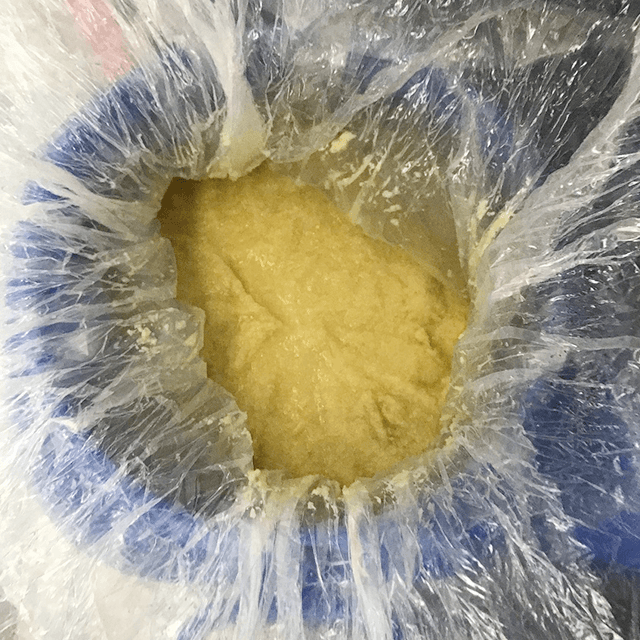
Homemade and ready-made ginger paste offer different advantages in freshness, convenience, consistency, and storage. Homemade paste provides greater control over ingredients, while commercial products are useful for restaurants and food manufacturers that require efficient preparation.
Ready-made ginger paste reduces preparation time and helps maintain consistent flavor across batches. Ingredients and preservation methods vary by product. Some formulations contain salt, citric acid, or other approved ingredients.
Yipin's Freshly Ground Ginger Paste is available in retail packaging and provides a convenient option for everyday cooking and foodservice applications.
Homemade ginger paste is made by washing, peeling, and blending fresh ginger into a smooth mixture. A small amount of water may help blending, but additional liquid affects texture and storage stability.
Preparation Method | Main Advantage | Key Consideration |
|---|---|---|
Water-Based Paste | Neutral flavor and easy blending | Short refrigerated storage |
Oil-Based Paste | Suitable for selected savory recipes | Requires strict food-safety handling |
Vinegar-Based Paste | Adds acidity and tangy flavor | Acidity alone does not ensure preservation |
Homemade paste should be prepared with clean equipment, refrigerated promptly, and used quickly or frozen for longer storage.
Ginger-garlic paste combines two common aromatics into one ready-to-use ingredient. It is widely used in curries, marinades, stir-fries, and savory sauces.
The ginger-to-garlic ratio can be adjusted according to the recipe rather than following a fixed proportion.
For commercial kitchens and food brands, Yipin's Garlic & Ginger Paste offers a prepared blend with different packaging options.
Feature | Homemade Ginger Paste | Ready-Made Ginger Paste |
|---|---|---|
Preparation | Requires washing and blending | Ready to use |
Flavor | Depends on fresh ingredients | Consistent within product specifications |
Ingredients | Controlled by the cook | Depends on the formulation |
Storage | Usually short-term | Follow product label |
Convenience | Requires preparation time | Suitable for repeated use |
Best For | Home cooking and small batches | Restaurants, catering, food processing |
Ginger paste provides a convenient way to distribute ginger flavor throughout different dishes. Its moist texture makes it particularly useful in marinades, sauces, curries, and dressings.
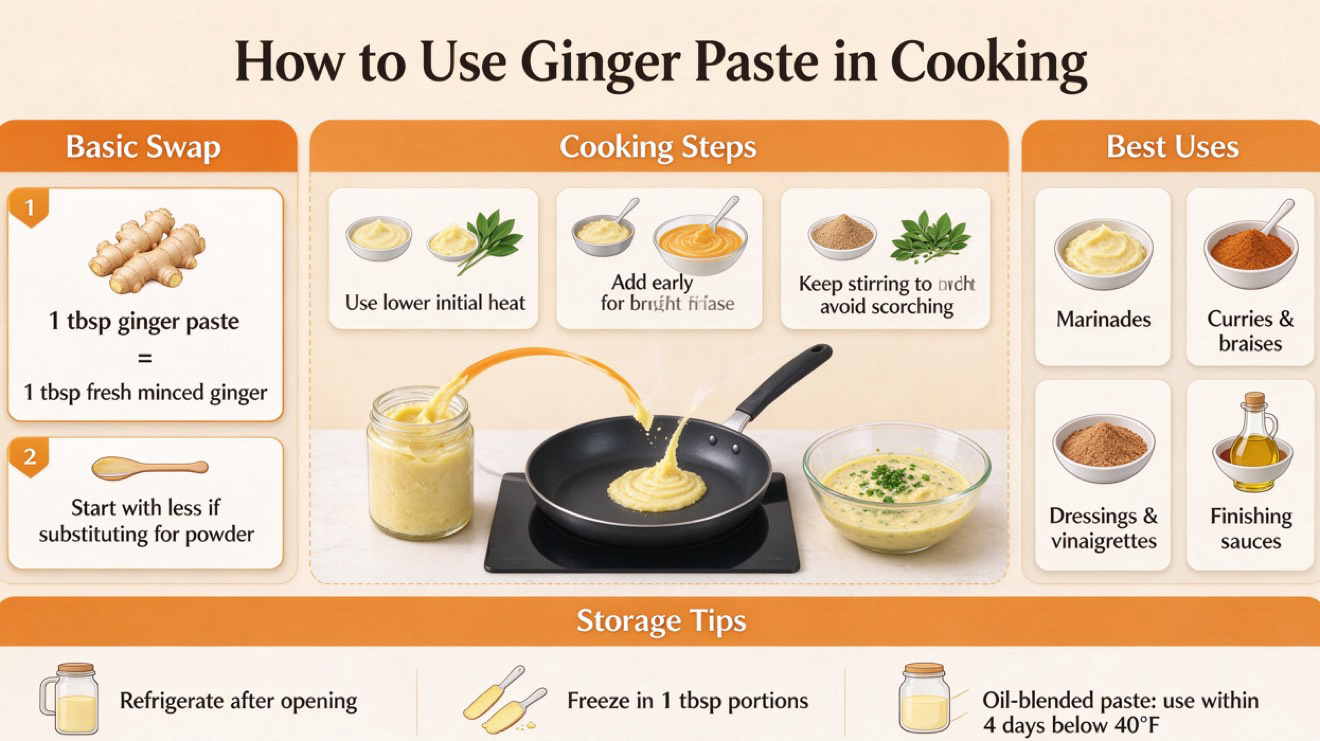
Ginger paste adds flavor to meat marinades and helps distribute aromatics evenly. Fresh ginger contains protein-breaking enzymes that may contribute to tenderization, although activity varies with processing and heating.
For best results, combine ginger paste with other marinade ingredients and adjust marinating time according to the meat, recipe, and food-safety requirements.
Ginger paste works well as a base aromatic in curries, soups, and stir-fries. It can be cooked with garlic, onions, and spices to develop a balanced savory flavor.
Add the paste over moderate heat and stir frequently to prevent scorching. Cooking time depends on moisture content and the desired flavor.
For larger foodservice operations, Yipin offers Ginger Paste 10kg, a bulk packaging option for food processing and catering.
Ginger paste can also be used in cold sauces, salad dressings, dipping sauces, and ginger-flavored beverages. Its natural fibers may affect texture, so blending or straining may be needed for smoother preparations.
Yipin's Ginger Sauce combines ginger with scallion, oil, and seasonings for convenient savory applications.
Proper storage is essential for maintaining ginger paste quality and reducing food-safety risks. Homemade and commercially processed products require different handling methods.
Ginger paste may change color and aroma during storage because of oxidation and other natural reactions. Some color changes can occur without spoilage, but appearance alone cannot establish food safety.
Use clean, food-safe containers and limit unnecessary exposure to air. Discard products showing mold, unusual odors, or other signs of spoilage.
Homemade ginger paste should be refrigerated promptly and used within a short period or frozen in small portions for longer storage.
Freezing in portion-sized containers makes it convenient to add ginger to cooked dishes without repeatedly opening a large batch.
Commercial ginger paste may have different storage requirements depending on its processing and packaging. Always follow the manufacturer's instructions, especially after opening.
Homemade ginger paste mixed with oil requires particular care. Oil can create low-oxygen conditions that may support dangerous microbial growth if the product is not processed and stored safely.
Do not store homemade ginger-in-oil mixtures at room temperature. Refrigerate promptly, use within a conservative short period, or freeze. Do not rely on an oil layer, vinegar added by guesswork, or normal smell and appearance to establish safety.
Commercial shelf-stable products require validated processing and packaging controls.
Restaurants and food manufacturers should verify:
Product ingredients and packaging specifications.
Unopened shelf life and storage conditions.
Refrigeration requirements after opening.
Batch identification and traceability.
Applicable food-safety documentation.
For bulk purchasing, Yipin provides different ginger paste packaging formats suitable for foodservice and processing requirements.
Audit your current recipe workflows to identify specific bottlenecks in aromatic preparation, tracking the exact labor hours spent peeling and mincing whole ginger.
Transition to a commercial puree if your operation prioritizes high-volume scalability and labor reduction over absolute flavor purity.
Implement a standardized silicone mold freezing system for homemade batches to ensure exact volumetric portioning and zero flavor degradation.
Adjust your line cooking procedures by dropping initial pan temperatures to 300°F before adding purees to prevent aggressive splattering and scorching.
Enforce strict labeling, dating, and temperature control protocols (under 40°F) for any oil-blended aromatics to eliminate botulism risks.
A: One inch of fresh, unpeeled ginger root yields about 1 tablespoon of finely minced ginger. Substitute exactly 1 tablespoon of paste to achieve the equivalent flavor intensity and aromatic profile in your recipe.
A: It is not recommended. Baking relies on precise moisture ratios. Paste introduces significant water content that alters the texture of cakes or cookies. Ground ginger has a concentrated, earthy flavor specifically suited for baked goods, whereas paste provides a sharp, fresh bite.
A: Use neutral oil if you plan to freeze the mixture or use it within four days, as it preserves volatile oils best. Use vinegar to extend refrigerated shelf life, though it adds acidity. Avoid water, as it promotes rapid spoilage and causes dangerous splattering in hot pans.
A: The standard culinary ratio is exactly 1:1 by weight. Using equal parts peeled garlic cloves and peeled ginger root ensures a balanced aromatic base where neither the sharp heat of the ginger nor the pungent allicin of the garlic overpowers the other.
A: Yes, it is completely safe to eat. The green or blue discoloration is a natural chemical reaction. Trace amounts of anthocyanins in the ginger react with acidic environments or trace metals from your blender blades, causing the color shift.
A: If blended with water or oil, it lasts up to 4 days in the refrigerator due to bacterial and botulism risks. If blended with a significant amount of vinegar to lower the pH, it can last up to 2 weeks. For longer storage, freezing is required.


